
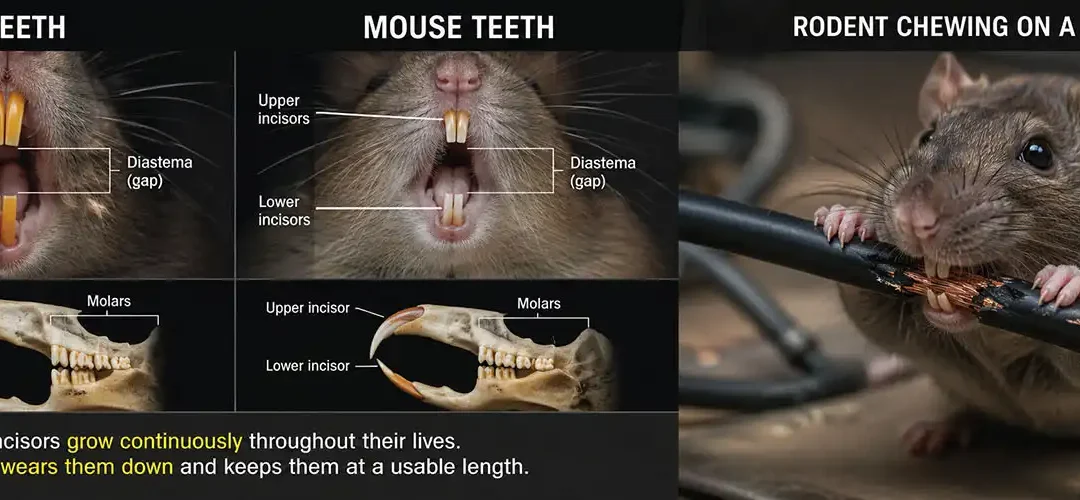
Rodent Teeth Never Stop Growing
Rats, mice, and other rodents possess specialized front teeth called incisors that grow continuously throughout their lives. Unlike human teeth, rodent incisors do not stop growing. In fact, a rat’s incisors can grow several inches per year if left unchecked.
To prevent their teeth from becoming too long and interfering with their ability to eat, rodents must constantly wear them down through gnawing. This process keeps their teeth sharp, properly aligned, and functional. Without regular gnawing, overgrown teeth can make it difficult or impossible for a rodent to feed, ultimately leading to starvation.
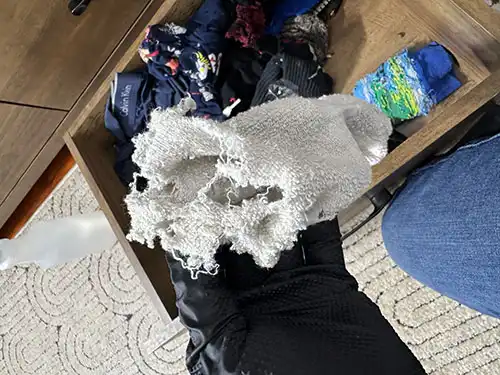
Why Rodents Chew on So Many Different Materials
Rodents are not particularly selective about what they chew. They may gnaw on:
- Wood framing
- Drywall
- Plastic containers
- Cardboard boxes
- Furniture
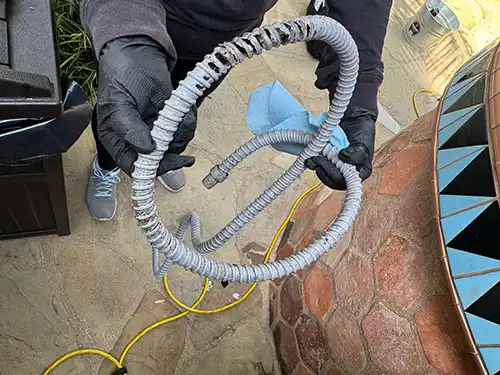
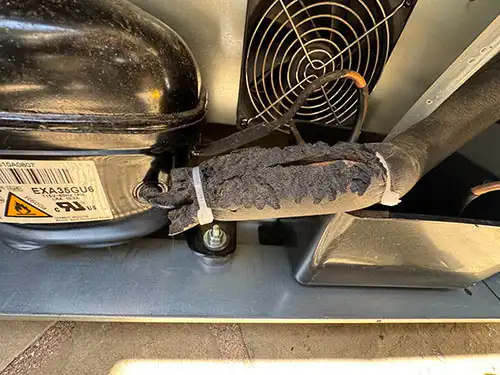
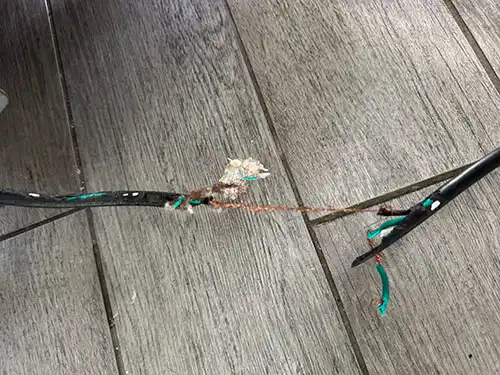
- Electrical wiring
- PVC piping
- Insulation
- Stored belongings
Different materials provide varying levels of resistance, helping rodents maintain the ideal length and sharpness of their teeth. Unfortunately, many of these materials are commonly found inside homes, garages, sheds, storage units, and commercial buildings.
Gnawing Helps Rodents Access Food and Shelter
Beyond dental maintenance, rodents use gnawing to gain access to food sources and nesting locations. A mouse can squeeze through an opening as small as a dime, while rats can enter through surprisingly small gaps as well. If an opening is almost large enough, rodents may simply chew it larger.
Food packaging is another frequent target. Rodents can chew through cardboard, plastic, paper, and even thin wood to reach stored food. Once inside, they often contaminate food supplies with droppings, urine, and nesting materials.
The Hidden Dangers of Rodent Gnawing
While gnawing is essential for rodents, it can create significant problems for property owners.
Electrical Fires
One of the most serious risks is damage to electrical wiring. Rodents frequently chew through wire insulation, exposing live conductors. This can create short circuits and increase the risk of electrical fires.
Water Damage
Rodents may also chew through plastic or PVC plumbing components, potentially causing leaks and water damage behind walls or beneath cabinets.
Structural Damage
Over time, repeated gnawing can weaken wooden framing, cabinets, doors, and stored items. While rodents rarely compromise the structural integrity of an entire building, the cumulative damage can be costly.
Contamination
Areas where rodents are actively gnawing often contain droppings, urine, sebum, and nesting materials. These contaminants can carry bacteria, viruses, and other pathogens that make cleanup more than just a cosmetic concern.
Rodent Gnawing Is a Sign of Active Infestation
Fresh gnaw marks are often a strong indicator that rodents are currently present. New chew marks typically appear lighter in color and have rough, sharp edges. Older damage tends to darken and become smoother over time.
If you notice new gnawing activity, it is important to identify and eliminate the rodent population before the problem escalates. Rodents reproduce quickly, and what starts as a minor issue can become a significant infestation in a relatively short period.
Cleanup After a Rodent Infestation
Even after rodents have been trapped or excluded, the evidence they leave behind remains. Droppings, urine contamination, nesting materials, and sebum deposits can persist long after the rodents are gone.
Professional rodent droppings cleanup and decontamination can help restore affected areas by removing contamination, disinfecting hard surfaces, and addressing odors associated with rodent activity.
Why Understanding Rodent Gnawing Matters
Rodents gnaw because they have to. Their continuously growing teeth make chewing a biological necessity and a critical part of their survival.
Unfortunately, that natural behavior often results in damaged property, contaminated storage areas, and increased health risks for homeowners and businesses.
If you are seeing gnaw marks, droppings, or other signs of rodent activity, it may be time to address both the infestation and the contamination left behind before the problem grows larger.
